I recently posted a blog for Neurodiversity Celebration Week, entitled Celebrating Uniqueness. Today is World Autism Awareness Day and April is World Autism Awareness Month. I have decided to post my final year dissertation (2004) to my blog for anyone to read. I first started working with people who have an autistic spectrum disorder in 1986 and at the time of writing this blog, I still have that privilege. Feel free to add a comment if you have any questions. All the best, Sharon x
1. Abstract
The dissertation examines the Picture Exchange Communication System (PECS): An alternative communication system, primarily geared towards the needs of children with Autistic Spectrum Disorder (ASD) who have impaired, or no functional speech.
The primary goal of PECS is not to teach children how to talk, but to provide them with functional communication skills.
During PECS training the child initially learns to approach a ‘communicative partner’ to exchange a picture of an item that he/she wants.
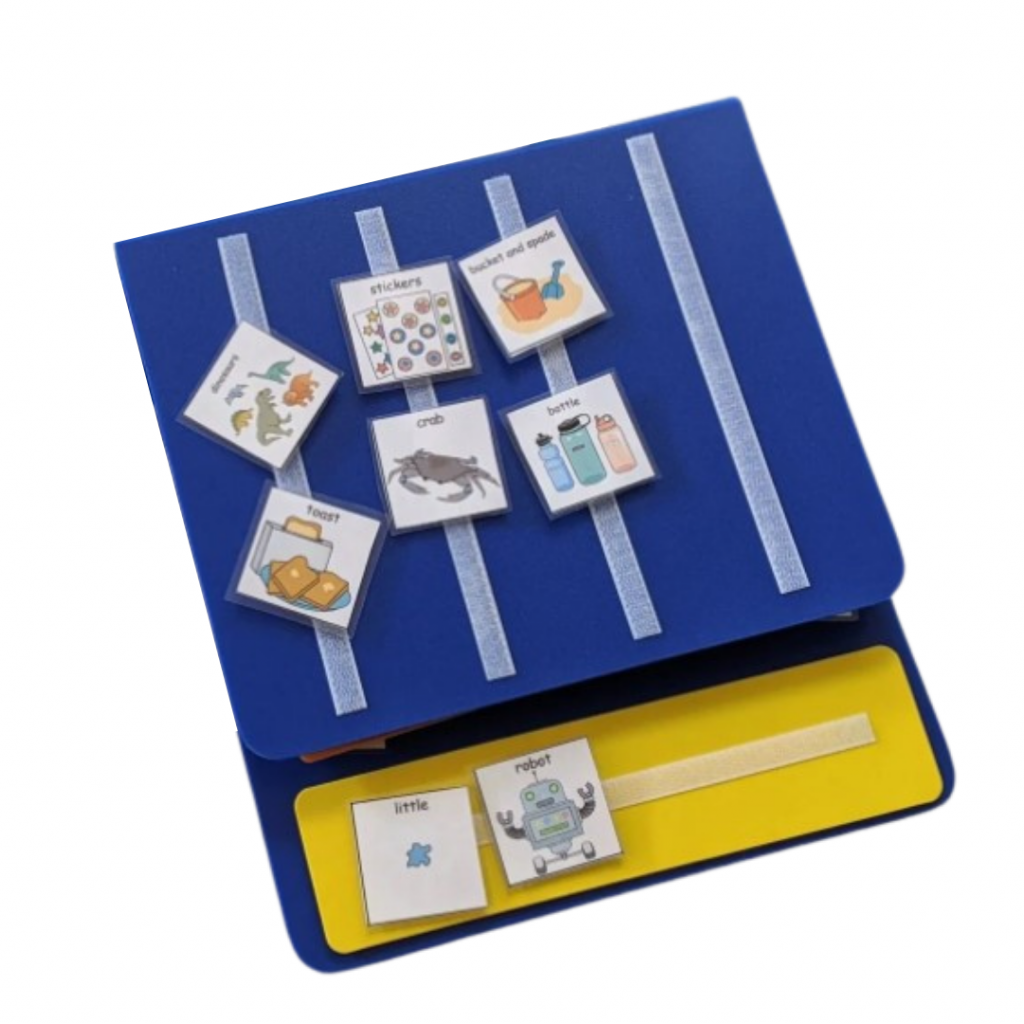
PECS is a phased approach that encourages the child to acquire the system rapidly, with increasing vocabulary and simple sentence structure, using small pictures attached to a ‘sentence strip’ with Velcro.
Once a child has passed through all 6 phases of PECS, he/she will be able to make his/her needs and wishes known, comment about aspects of their environment and respond appropriately to questions from others.
The dissertation looks at how PECS addresses the communication impairments common in ASD and reviews recently published material on the subject. It then moves onto a single-subject case study of an 8 year old boy with ASD and no functional speech, who attends an autistic unit in a local primary school and has been using PECS for four years.
Primary research data for the case study was collected by direct observation, while working with the pupil in the classroom, interviews with significant others and photographs.
The broad conclusions were that PECS appears to be a beneficial system for children who have ASD with limited functional spoken language.
The results of the case study correspond to the results reported in the published material: PECS training appears to result in the successful use of PECS as a mode of communication, increases in eye-contact, spontaneous communicative exchanges, socio-communicative behaviours, imitation, spontaneous speech and corresponding decreases in challenging behaviours.
It is appreciated that a single-subject case study cannot be seen as being representative. However, the results can be regarded as illustrative of the use of PECS.
2. Introduction
As a registered learning disabilities nurse, the author has worked for many years with people who have an autistic spectrum disorder, or other types of learning disability. In 2002, while working voluntarily in an autistic unit in a local primary school, she encountered the Picture Exchange Communication System. Seeing the merits of the system, the author wanted to learn more about it. Finding that very little had been published about ‘PECS’, particularly in the UK, the author decided to write her final year undergraduate dissertation on the subject.
Autism is today regarded as a continuum disorder. Autistic spectrum disorder (ASD) is described as “a complex lifelong developmental disability that affects the way a person communicates and relates to people around them” (NAS, 2003:online). ‘True’ autism with severe learning disability is at one end of the spectrum while Asperger’s syndrome, with no learning disability, is at the other end.
People with ‘true autism’ are thought to make up about 0.1% of the UK population (Dockrell and Messer, 1999:68).
Some children with ASD develop good spoken language skills. Others may develop the ability to imitate, referred to as ‘echolalia’, but may not use functional speech. It is thought that as many as half of all children with ASD will not go on to develop any speech. Evidence also suggests that a child who has not acquired single-word speech by the age of 6 years will be unlikely to go on to develop multi-word speech (Dockrell and Messer, 1999:70).
For this reason, early intervention is vital, if a child, who cannot speak, is to develop the ability to communicate.
The Picture Exchange Communication System (PECS) was developed in 1994 in the USA, by Dr.Andy Bondy and Lori Frost.
PECS is an augmentative communication system, created primarily for children with ASD who have no functional speech. The primary goal of PECS is not to teach children how to talk, but to provide them with functional communication skills.
The system is distinct from many other alternative communication systems in that it requires the child to initiate communication, form the outset. The child initially learns to approach a ‘communicative partner’ to exchange a picture, or symbol of an item that he/she wants. In this way, the communication is always meaningful and rewarding.
PECS is a phased system that encourages the child to acquire the system rapidly, with increasing vocabulary and simple sentence structure, using symbols attached to a ‘sentence strip’.
Once a child has passed through all 6 phases of PECS, he/she will be able to make his/her needs and wishes known, comment about aspects of his/her environment and respond to questions from others: All the main functions of spoken language (Bondy and Frost 2002:106).
[The County] Local Education Authority prides itself on its services for children who have ASD. For children aged 3-16 years, who have been diagnosed as having an ASD, there are 15 classes in total, from a combination of individual support in mainstream classes, communication disorder classes in mainstream schools, autistic classes in mainstream schools and provision for pupils with greater needs in two special schools, where as many children as possible are educated within their own communities. [The County] provides a holistic service for children with ASD and their families using a multi-agency approach. In the autumn of 2003, [The County] won a prestigious National Autistic Society ‘Autism Inclusion Award’ for its inclusive practices for pupils with ASD (NAS, 2004:Online).
Of the 15 classes, 12 incorporate PECS in its fullest form. All of the teaching staff have been on the 2-day PECS training workshop, run by PECS UK, with four teachers having been on the 5-day course. Many or the support staff have also been on the 2-day workshop. [The County] also runs training courses for parents whose children are using PECS, to encourage its use as a means of communication for those children in the wider community.
The dissertation aims to examine PECS as a system, drawing on examples of its use in [The County] and on recently published material on the subject. In addition, a case study was carried out in order to study PECS in use.
The subject of the case study was an 8-year-old boy with ASD and no functional speech, who attends an autistic unit in a local primary school. He has been using PECS for four years.
Primary research data for the case study was collected by direct observation, while working with the pupil in the classroom, interviews with significant others and photographs.
The dissertation is brought to a conclusion by combining the primary and secondary research material and making recommendations for future research into PECS.
3. The Nature of Communication
When we consider the word ‘communication’ we tend to imagine people talking. However, there is a lot more to communication than spoken conversations. The Oxford Dictionary defines the verb ‘communicate’ as to “impart, transmit (news, feelings, ideas, etc)… have social dealings.”
Communication always involves three components: A sender, a message and a receiver. The ‘message’ may be spoken words, or some other medium such as written text. The ‘sender’ is the person/people who creates, or encodes the message. The ‘receiver’ is the person/people who accepts and decodes the message. It is clear that communication cannot occur outside of the social context: At least two people are involved in communication, even when there is no face-to-face contact, as with a letter, for example. The exchange is still governed by society’s conventions.
A child, alone in a room, who points to the television and says, “TV” is not communicating, because there is no ‘receiver’. In this situation, language is being used, but not for the function of communication.
Bondy and Frost (2002:1) ask the question, “Is speech necessary for people to communicate?” Clearly, the answer is, “No.” There are, however, definite advantages to spoken language: Speech is portable, instantly accessible, easy to use and likely to be understood by the ‘receivers.’
When designing the Picture Exchange Communication System, for children who do not develop functional speech, the creators bore the benefits of spoken language in mind and incorporated them into the system, as shall be discussed in due course.
Normal child language acquisition follows a particular course, as summarised below.
| Age in months | Characteristics |
| 0-3 | Infant prefers sound of caregivers’ voices to other sounds in the environment. Reflexive crying. |
| 3-6 | Cooing, ‘vocal play’ |
| 6-9 | Social referencing, babbling |
| 9-12 | First words, e.g. ‘Mama’ ‘Dada’ |
| 12-18 | ‘Holophrastic’ – Single words used to communicate |
| 18-30 | Two-word stage – Telegraphic, two-word utterances |
| 30-36 | Increasingly longer utterances + use of syntactic and grammatical rules begin to emerge |
Table 1 (Based on Crystal, 1997)
Even before an infant has acquired any speech, he/she will use ‘social referencing’ as a means of communicating by eye contact. Infants “look at their caregivers for some indication of how they should feel and act when they encounter something unfamiliar” (Cole and Cole, 2001:209).
At the ‘holophrastic’ stage, the child uses single words to function as if they were a whole sentence, by using different tones, intonation and non-verbal cues. A single word can be used as a question, comment or request. For example, /dədə/? when the child hears the front door open; /dədə/! when Daddy comes into the room and /dədə/ with arms outstretched, when the child wants to be picked up.
The requesting and commenting functions of communication are the two fundamental aspects of spoken communication that are addressed by PECS, to enable children who do not have any functional speech, to be able to communicate.
4. Communication Impairments in Autistic Spectrum Disorder
As was stated in the previous section, communication is always a social behaviour. The main impairments in ASD are related to social and communication skills.
There are 3 classes of impairment that are always present across the whole autistic spectrum to some extent. These are referred to as the ‘triad of impairments’ (NAS, 2003:Online) of:
- Social interaction (difficulties with social relationships)
- Communication (difficulties with verbal and non-verbal communication)
- Imagination (including ‘theory of mind’, which shall be discussed presently).
Other common, although not central, features of ASD may include stereotyped behaviours such as finger flicking, spinning objects, rocking, or arranging objects in lines or patterns. A child with ASD may also have problems with eating and sleeping habits. They may also be either over, or under active. Resistance to change and challenging behaviours are also common.
Clearly, all these complications will disrupt the development of effective communication skills, in different ways.
The most salient feature of the communication of children with ASD is that it is different from that of children who do not have impairment. Development of communication skills is often delayed, but is also characteristically deviant (Dockrell and Messer, 1999:69).
The triad can be observed from around 18 months of age. The infant may not develop joint attention behaviour or social referencing.
He/she may reach the expected babbling and early language acquisition milestones, but then slow dramatically at around 24 months, possibly stopping speaking altogether (Bondy and Frost, 2002:20). About half of all children with ASD do not develop speech at all (Charlop-Christy (et.al) 2002:213).
As stated, the triad of impairments is always present in ASD, but the features manifest in widely different ways. No single characteristic is always typical of ASD (National Research Council, 2001:136).
A child with ASD may regard others more as objects than people. He/she may appear aloof or indifferent towards others, or if they do spontaneously approach others, it may be in an inappropriate or peculiar manner. This may be explained by the supposition that children with ASD do not develop ‘theory of mind’. That is, the ability to appreciate that other people have different thoughts and perspectives from ones own. With a child who does not realise that others’ thoughts are not the same as his/her own, the motivation to communicate is diminished. Because he/she assumes that others’ thoughts are the same as his/her own, at any given time, there is no perceived need to communicate.
A child may respond more readily and pay more attention to interesting objects or sounds than to the human voice.
Most children with ASD have difficulty using or understanding non-verbal and prosodic components of communication including conventional gestures, facial expressions, body posture, intonation, stress and pauses.
A child with ASD is likely to have poor conversation skills, such as relating to turn taking and responding to cues from an interlocutor. They may also have difficulties following another’s gaze. Pointing is a further mode that children with ASD have difficulties either using or following. Eye contact is often absent or limited. Nevertheless, it is common for a child with ASD to have good spatial awareness and visual processing skills and he/she may also use contact gestures (such as pulling, or leading a caregiver by the hand) to communicate.
If they do not develop any of these strategies, they may use challenging behaviours, or ‘tantrums’ as a means of communicating or gaining attention.
Very often, any communicative attempt is mainly for gaining something that the child wants, rather than for commenting or purely for social etiquette.
Those children who do acquire speech may speak in an unnatural ‘mechanical’ way, with unusual intonation, stress and rhythm. They may appear to talk ‘at’ others, rather than with them (Aarons and Gittens 1999:65).
The lack of ‘theory of mind’ may account for many of the peculiarities. For example, pronoun reversal is common. A caregiver may ask, “Would you like a biscuit?” to which the child replies, “Yes, you would like a biscuit.” The same is true of gender, ‘he’ and ‘she’ being used interchangeably, or just using one pronoun for both genders. A child who has Asperger’s syndrome, with no learning disability, may have a very literal, concrete, understanding of spoken language. This results in difficulty understanding metaphor and sarcasm or pragmatic elements of communication.
A child may acquire a large vocabulary, but the expressive vocabulary (what he/she can say) may exceed the receptive vocabulary (understanding of words). Even a child who has learned to read may exhibit ‘hyperlexia’: The ability to read without comprehension. Conversely, it is also possible that a child may understand what is being said, but not be able speak (Bondy and Frost, 2002:11).
Echolalia (imitating words or phrases) is very common. It may be immediate or delayed. For example, the repeating of television jingles. There may also be ‘mitigated echolalia’ whereby the child repeats chunks of speech when ‘cued’ by a situation. For example, another child throws an object in the classroom, which elicits the echolalic utterance, “Don’t do that again or you will have to sit on your own!”
As will be observed in the next section, the Picture Exchange Communication System was designed from the point of view of the child with an autistic spectrum disorder. PECS capitalises on the strengths of children with ASD, such as the good visual processing skills. At the same time, it takes into account the common difficulties, such as lack of speech and limited eye contact.
5. The Rational Behind PECS
Before looking at the actual processes involved in the Picture Exchange Communication System, it is important to investigate the principles that underpin the system.
Compared with many of the earlier alternative communication systems, used to help autistic children, PECS is a novel approach in several respects. Many of the earlier approaches are somewhat ‘top down’, coming from the perspective of the trainer, rather than the child.
PECS is a child-centred approach that draws on principles from applied behavioural analysis. Characteristics central to PECS are the emphasis on spontaneous communication and interaction with other people from the outset (Baker, 2000:15).
Because of the nature of ASD, direct methods of trying to teach children with this disorder to speak are often met with limited success. Children with ASD often have difficulty with eye contact, joint attention and imitation, all of which are important for the development of speech.
Signing communication systems, such as ‘Makaton’, although more visual, are also difficult for a child with ASD, due to the difficulties of forming or understanding gestures and limited eye-contact. These systems are also ‘prompt-dependant’. That is, rather than teaching a child to communicate spontaneously, they teach the child to respond in a particular way to a particular cue. For example, the trainer may say, “Make the sign for sweet”; following which, if the child responds correctly, the reinforcement (sweet) is given. Another drawback of signing systems is their lack of universal comprehensibility. Sign languages are not understood by the wider community, which limits a child’s opportunities for inclusion in the community at large.
Point-to-symbol systems, such as ‘Rebus Symbols’ (Widgit, 2002) are also problematic, because a child with ASD may not be able to understand or use pointing as a means of communication.
Additionally, this type of system also requires pre-requisite skills of picture discrimination and matching, which can take a long time to learn and consequently further delay the child’s development of functional communication skills. Again, if a child points to, or taps a picture, or a symbol, when no-one is around to see this, such behaviour is not, strictly speaking, communication. Like signing systems, point-to-symbol systems are also prompt-dependant, for example, “Point to the biscuit.”
These types of systems also start with a ‘labelling’ or ‘commenting’ function, which is contrary to the natural developmental sequence, where expression of need is acquired first.
Speech imitation, signing or point-to-symbol systems are often accompanied by social reinforcements, such as praise or clapping, which are weak motivators for a child with ASD who finds such reinforcement too abstract.
PECS requires interaction with other people from the outset and ensures that the child initiates communication rather than merely responding to prompts.
Pre-requisite skills such as joint-attention, imitation or eye contact are also not necessary to commence PECS training (Baker, 1998:1).
PECS can be introduced shortly after assessment of a child’s needs, with a child as young as 2 years of age (Magiati and Howlin, 2003:298). In [The County]children can commence PECS training soon after receiving a diagnosis of ASD and a short assessment period at a pre-school ‘Sure Steps’ group. The youngest person in [The County] using PECS at the moment is 2 years of age and already he is forming simple sentences using the PECS symbols and the ‘sentence strip’.
Although it has been used successfully with other groups, the main target group for whom PECS was created is children who have an ASD and limited, or no functional speech. (The term ‘functional’ is employed, because, as discussed in the previous section, many children with ASD use non-communicative echolalia).
Rather than insisting that the child imitates, or responds in a certain way, PECS starts by teaching the child to initiate communication. And because PECS requires the child to initiate the exchange, it is not prompt-dependant and encourages spontaneous communication.
The initial phases of PECS are based on the most fundamental element of communication, of expressing needs, making requests. Once this function is mastered, it then progresses to the commenting function. In this way, PECS mimics the natural developmental sequence, as discussed in section 3. In typical language development, a child first of all learns to communicate their needs by gaining another’s attention, without words, and then with single words and progressively with sentences.
Recall that in typical language development children learn to approach adults to communicate even before they have any formal message (i.e. words) to use. The goal in PECS is to achieve the same spontaneous approach. (Bondy and Frost, 2002:83)
As discussed earlier, during the ‘holophrastic’ stage of typical language acquisition, young children use different intonation and stress to give meaning to their single word utterances. Children with ASD commonly have unusual patterns of intonation, so may not be able to convey this. PECS addresses this by teaching a child to use the system to clarify whether the symbol they are exchanging is a comment or a request. Once a child has mastered exchanging a single symbol, for a desired item, or activity, an ‘I want’ symbol is added to it, to form a simple sentence. For example, ‘I want – biscuit.’ Once this function is mastered, an ‘I see’ symbol is introduced, followed by attributes, such as colour and number. Progressively, other commenting symbols are added, such as ‘I hear’ and ‘I feel’.
Rather than ignoring, or trying to overcome the common difficulties faced by people who have an ASD, PECS actually harnesses the child’s differences. Children with ASD often have strong visual processing skills, hence the use of pictures and symbols.
Children with ASD often have an inability to relate to words as ‘secondary representations’ of things in the world around them. Words, as De Saussure illustrated, are merely arbitrary symbols that have no intrinsic meaning (Trask, 1999:12). The easily understood pictures of PECS overcome this problem (Dockrell and Messer, 1999:74).
Children with ASD tend to have very concrete thought processes, and difficulties with abstract concepts. They therefore find learning-tasks easier if they are presented in a structured, concrete format, such as in PECS, than if they are presented in a more abstract mode, as with the spoken word alone (Charlop-Christy (et.al) 2002:227).
Before a PECS programme begins, those things that are strong motivators for the child are identified. One of these items, perhaps a sweet, is shown to the child and paired with a picture or symbol of that item, which the child is physically prompted to exchange for the sweet. The communicative exchange is thus initiated (albeit prompted) by the child and reinforced by the child receiving what he/she wants. In this way communication is meaningful and rewarding for the child from the outset.
Social rewards, such as smiles, praise, or clapping, are weak motivators for children with ASD. This is primarily because these children rarely choose to approach others purely for sharing information or mutual companionship. One of the reasons why PECS is so successful is because the initial reinforcements are always based on what the child needs, or wants.
In PECS, the communication is always functional and meaningful. “Before we can begin to teach a child to communicate, there must be a reason for that child to communicate” (Bondy and Frost, 2002:72). If a child is simply taught to point to a symbol or to imitate a gesture, it is not necessarily functional and therefore, strictly speaking, not communication.
Learning theory tells us that a behaviour that is reinforced is likely to be repeated. Because PECS exchanges are always reinforced, the system is often learned very rapidly.
Young children do not naturally comment about static aspects of their environment, such as the carpet or the window. They comment on things that capture their attention, or are out of the ordinary (Bondy and Frost, 2002:104). PECS takes this into account. The commenting function is introduced either by a deliberately structured teaching session, or by introducing symbols for events that are uncommon. Examples of these may be a visitor to the classroom, or a helicopter coming into view.
The primary goal of PECS is to teach communication as apposed to speech (Liddle, 2001:392). However, accumulating evidence suggests that not only does PECS not interfere with the development of speech, but it actually encourages its development (Bondy and Frost, 1998:0nline).
During PECS, every exchange is paired with the words that the pictures represent, spoken by the ‘communicative partner’, thus encouraging and reinforcing imitation. PECS encourages speech but does not force or insist upon it (Bondy and Frost, 2002:114).
PECS follows a gradual, logical, phased approach from phase 1-6 in sequence, each phase building from the previous one, adding one new skill per lesson.
The equipment used in PECS is relatively simple and inexpensive. The types of symbols can be tailored to meet individual needs. For example, large or small pictures, coloured or line drawn, symbols or photographs. At the beginning, the pictures can be mounted on blocks of foam if the child has difficulty handling laminated paper symbols.
Children with ASD often have difficulty coping with change. During phase 6 of PECS, this area is addressed by the introduction of ‘planned surprises’ (Bondy and Frost 2000:131).
As with spoken language, PECS is designed to be portable and accessible at all times. Also, because each symbol bears the written word underneath, the system has universal comprehensibility, thus increasing opportunities for inclusion in the wider community, and not just with others who understand the system (PECS UK 2001:Online).
PECS is designed to become the child’s main means of communication, and as such, should be used not only at school, but also at home and in all other contexts as well.
This will have a knock on effect for the acquisition of other skills, because the child uses PECS to communicate at all times, “the cognitive load is reduced, enabling the child to assimilate new concepts and ideas more easily.” (Bondy and Frost, 2002:38)
Once a child has passed through all 6 phases of PECS, he/she is then empowered to make his/her needs and wishes known, comment about aspects of their environment, respond to questions from others and use social etiquette: All the main functions of spoken language (Bondy and Frost 2002:106).
6. PECS: A Phased System
6.1 The System
In [The County] PECS is incorporated into each pupil’s Individual Education Plan (IEP) that has annual reviews and goals. The creators of PECS unequivocally endorse the use of IEPs as a positive child-centred approach (Bondy and Frost, 2002:63).
The importance of involving the co-ordinated efforts of staff and parents/carers in the teaching of PECS is also emphasised. 2-day training workshops are regularly run by PECS UK (the UK branch of PECS consultants) in [The County] and across the UK, for people wishing to be involved in teaching PECS to an individual or a group. RCT also provide their own training workshops for parents/carers.
PECS is taught through a series of logically planned phases, from phase 1-6, followed by a ‘post-phase’. The child must successfully master each phase before moving onto the next, but there is no set timescale for completion of each phase. Some children progress very quickly to phase 6, whereas others may remain at an earlier phase for several months. For implementation guidelines, the PECS phases are detailed in Bondy and Frost (2002) and in the PECS Training Manual (Bondy and Frost, 1994).
Initial PECS training is quite intensive, with 40+ recommended exchanges, between child and trainer(s) across the day. After reaching the post-phase, the child guides decisions as to the termination or continuation of PECS. Normally, PECS is continued as long as it is providing an effective mode of communication for the child. Once a child can speak in as complex a fashion without PECS, as with the system, it may be discontinued.
Before a PECS training programme can commence, certain resources must be available: All the items can be purchased directly from PECS UK, or can be tailor-made. The communication binder from PECS UK measures approximately 19x16cm, with a detachable sentence strip measuring 10x3cm. The symbols/pictures can be stored inside the binder. The binder also needs a strap, to make it portable and also so that it can be placed on a hook in the classroom, or at home, where it will be readily accessible.
The symbols can be made by printing onto paper from a computer software package (such as ‘Pics for PECS’ from PECS UK or ‘Writing with Symbols’ from Widgit Software). The symbols need to be laminated and a small piece of Velcro attached on the reverse, to secure them to the binder or sentence strip.
The minimum human resources needed to commence a PECS program are two trainers, ideally both of whom who have attended the PECS training workshop. One trainer will be the ‘Communicative Partner’ (CP) and the other will be the ‘Physical Prompt’ (PP). These roles will become evident in the following summary of the Phases of PECS (Section 6.2). [I was not able to include this as the tables wouldn’t copy across]
7. Recent Reviews
Detailed accounts of the outcomes of PECS programmes are scarce, particularly in the UK. Most of the reviews have been descriptive in nature and contain limited, or no statistical analyses.
The first review of PECS was following its development in 1994, at the Delaware Autistic Program, USA, by Dr.Andrew Bondy, psychologist and Lori Frost, a speech and language therapist. The pilot project was with pre-school children, who grasped the system rapidly and soon began to initiate communication. Once the children had learned between 30-100 symbols, almost 60% of them also began to use speech. Many children from this group eventually discontinued using PECS as they had learned to use speech as their main mode of communication (Bondy and Frost, 2002:46).
One other study in the USA, showed how three children with ASD, who had learned PECS, made significant increases in spontaneous speech and imitation, co-operative play, joint attention behaviours and eye-contact. There were also correlated decreases in challenging behaviours (Charlop-Christy(et.al) 2002:213).
Psychologist, Sue Baker, who is today the director of PECS UK, in Brighton, first introduced PECS to the UK in 1996. A UK pilot project was carried out in a partnership with the West Sussex Educational Psychology Department and the Portage Service, in 1998. Parents of pre-school children with ASD and their Portage workers were trained as ‘communicative partners’ and ‘physical prompts’ to teach the children PECS (Baker, 1998:3). The project was deemed a great success and by 2001 over 7,000 people had attended the 2-day training workshops, held across the UK (PECS UK, 2001:Online).
A detailed report on the impact of PECS on children with ASD and severe learning disabilities was completed in 1999 (Webb, 2000b). The class teacher, speech and language therapist and a parent-helper implemented the programme with six children, aged 4-6 years. PECS was given first priority on the timetable and the children’s parents were involved from the outset, having an additional communication binder for use at home. All the children acquired the initial stages very rapidly, reaching Phase 6 after only 9 weeks. All the children developed spontaneous speech, with and without PECS. Eye-contact and other social behaviours also increased. These findings corresponded to the findings of Bondy and Frost (2002).
Another detailed report, described the outcomes for 21 children in different classes in a special school (Liddle, 2001). Training was integrated into the daily timetable along with weekly individual sessions with the speech and language therapist.
One child did not acquire Phase 1, so was released from the programme. All the other 20 children learned to use PECS to make requests. 11 children also learned to use the sentence strip for requests and commenting, including some attributes. There were increases in speech, socio-communicative behaviours and decreases in challenging behaviours, which again correspond to the findings of Bondy and Frost (2002). Several of the parents also reported pleasure at having a means of communication with their children.
In a special school in Edinburgh, PECS has been used in an adapted format, to fit with existing methods (Ross, 2002:Online). Digital photographs were used, before the children were introduced to PECS. Symbols were used to make individual daily timetables and ‘news-boards’ to take home, to show the children’s families what they did during the day. This report illustrated how PECS can be used with a flexible approach, to suit individual needs and preferences.
A very significant project was carried out over a 6-month period in 2001 (Baker, 2001:1). Unlike many of the earlier UK projects, there was an independent evaluation co-ordinated by Patricia Howlin, Professor of Clinical Psychology at St.George’s Hospital Medical School, London. The objective was to make an “independent, pilot investigation of the potential value of PECS for children with autism in the UK in schools where teachers were all formally trained and subsequently monitored by PECS consultants” (Magiati and Howlin, 2003:301).
There were 34 children with a mean age of 7 years 8 months, in 8 special schools.
The outcomes were analysed statistically and revealed increases in PECS vocabulary, frequency of use and proficiency with the system. Increases were the most rapid soon after the introduction of the programme. It was noted that the less verbally able children made slower, but more steady progress, whereas the more verbally able group made more progress initially, but seemed to plateau later on (Magiati and Howlin, 2003:315).
The outcomes differed dramatically between individual children. The number of symbols used varied from 7 to 230, with the mean average being 35 symbols by the end of the 6-month period with only 10 of the 34 children working at Phase 6 (Baker, 2001:2).
Improvements in speech, eye-contact, socio-communicative behaviours and associated decreases in challenging behaviours were also noted.
One important observation was that some teachers reported difficulty maintaining the momentum after the initial rapid progress (Baker, 2001:2).
None of the reports discussed above had a control group. The implication of this is that it is not possible to conclude whether the improvements noted were entirely resulting from PECS, or also from maturational or other processes.
In the second phase of the Magiati and Howlin (2003) evaluation study, there is a control group. This is the first study of its kind in the UK. The study, which is currently in its first year, will feature independent assessment and evaluation over a 3-year period, (PECS UK, 2004:Online). 10 classes are involved in the study, with the control group being of similar aged children, with similar needs, in other schools, who are not using PECS. The teachers implementing the programme attended the training workshop and are being supported by visits from PECS consultants. Some parents attended the initial training and will be invited to follow-up meetings with PECS consultants, in order to support the use of PECS within the home, and wider community. Feedback that has been received from the programme so far has been encouraging, with the children making good progress with the system (PECS UK, 2004:Online).
The results from all the published accounts of PECS show a similar pattern of outcomes: Improvements in the use of PECS as a mode of communication, increases in eye-contact, spontaneous communicative exchanges, socio-communicative behaviours, imitation, spontaneous speech and corresponding decreases in challenging behaviours. From the evidence gathered so far, it would appear that PECS is a beneficial system for children with ASD, and in particular with the group who have significant difficulties or impairments with the development of functional speech.
The author has had email communication from Sue Baker (PECS UK, 21/02/04) who stated that no results from the PECS evaluation study would be released for several months. Hopefully, when they are published, the statistical analysis of the comparison of the ‘PECS’ group with the control group will produce some valuable empirical material on the subject.
8. Local Case Study: ‘David’
8.1 Introduction and Methodology
The information for the case study was collected over a 5-month period, from October 2003 to March 2004. The author had, however worked with the pupil, during a voluntary work-placement at the school, in 2002.
The methods by which the author collected the data for the case study were as follows:
- Direct observation, through working with David in the school, and during ‘accessing the community’ sessions.
- Informal interviews and incidental questioning with the class teacher and nursery nurse.
- Informal interviews and incidental questioning with David’s mother.
- Photographs and photocopies of PECS-related resources in the classroom.
- Photographs of David using PECS.
(The original photographs can be seen in Appendix 5)
Whilst the author recognised that there would be value in obtaining information from speech therapy, educational psychology, developmental assessments and school reports, these reports were not available, for reasons of confidentiality.
8.2 Pupil Profile
For reasons of privacy and confidentiality, ‘David’ is not the pupil’s real name and the names of other pupils, the school, staff members and David’s mother have also been withheld.
David is an eight-year-old boy who has an Autistic Spectrum Disorder. He is a quiet boy who is somewhat unmotivated, although he responds well when asked to do something, or to participate in an activity. Apart from with his mother, David tends to pull away from physical contact, although he will tolerate holding a carer’s hand when out. He uses fleeting eye contact as a means of ascertaining approval for some behaviour. If he is especially happy during an activity he will laugh or make tuneful vocalisations, ‘singing’ to himself.
David particularly enjoys playing in the schoolyard. He has quite a mischievous sense of humour, revelling in chasing other children or being chased either when running or on a scooter or trike. David also enjoys catching and throwing a ball, particularly when he steals it from a group. He does like to be with other children, but is not sure how to join in. It is common for a child with ASD to be one “who wants to have friends but approaches other children in bizarre, inappropriate, repetitive ways” (NAS, 2003:0nline). David does not have many opportunities to play with other children when he is not at school.
If something happens that David does not like, or he does not want to do, he may put his fingers in his ears, look away, edge away from the person or engage in finger-flicking behaviour. If he is forced to do something that he does not want to do, he may ‘hiss’ or raise his voice, and change his facial expression to show his disapproval, but generally, he is rather passive and acquiescent. If another pupil were ‘causing a stir’ he would generally just continue what he was doing, ignoring it, or put his fingers in ears, but not become upset.
David’s passive nature and low level of motivation to initiate interaction may be explained by the lack of ‘theory of mind’, if he “cannot imagine that people have different ideas and thoughts from [himself], then the motivation for communication is considerably reduced” (Dockrell and Messer, 1999:74). Similarly, children with ASD may regard others as merely objects within the environment, rather than as people in their own right.
David is not able to use speech as a means of communication, although he does have the ability to produce certain phonemes, which he uses to communicate in different contexts. Appendix 2 lists the speech sounds that David can and cannot articulate.
David was first introduced to PECS four years ago and has attained the ‘post-phase’. He has learned, and has access to around 160 symbols in his communication binders, at school and at home. He also knows about 50 additional symbols that are used for other activities and purposes (Appendix 1 lists most of the symbols that David knows).
8.3 The Classroom
The unit that David attends is a single class in a local primary school in [The County], catering for 6 children, up to the age of 11 years, who have been identified as having ASD. David came to the unit in 2000.
The unit was the first place in [The County] for PECS to be introduced, in 1998. The system was introduced to the unit by the then class teacher, nursery nurse and speech therapist, all of whom had attended the 2-day PECS training workshop. PECS quickly became a central characteristic of the unit for all the pupils.
Each pupil has an Individual Education Plan (IEP). This plan incorporates input from the class teacher, speech and language therapist, special educational needs co-ordinator and educational psychologist. The plan is reviewed every 6 months, and new goals set, to reflect the results of reports and assessments such as ‘CARS’, ‘Pragmatics Profile’, ‘Living Language’ and ‘Reynolds Scale II’ (Appendix 3).
The centrality of PECS can be seen as soon as one enters the classroom. All around the room, displays and photographs are accompanied by PECS labels, either single words or sentences. All the cupboards, drawers and resources in the classroom also carry PECS labels. Each child has his/her own PECS communication binder, which hangs from an easily accessible hook bearing his/her photograph. The binders are purpose-bought from PECS UK, but the straps are made from laces to be more cost effective. It was also felt that the Velcro strips were too widely spaced on the binders, which limited the number of symbols that could be stored in the binder so additional strips were added.
The symbols are approximately 2cm x 3cm. Most of the symbols are printed from the “Writing with Symbols 2000” software (Widgit, 2000) with the printed word underneath. With the exception of the symbols for colours, and the small photo-portraits, all of the symbols are black and white. If a symbol is not in the software, then one is hand-drawn and photocopied (see Image 4 below). The symbols are printed off the computer and laminated and small pieces of Velcro attached to the back, to enable the symbols to be attached to the binder and sentence strip.
Image 4: Examples of hand-drawn and computer ‘Widgit’ symbols

In addition to the individual binders, there are various PECS cards for specific activities, such as to accompany storybooks, and snack time (Appendix 5.5).
One important feature is the daily schedule, which is updated following morning and afternoon register. Each child ‘reads the board’ in turn.
Custom-made ‘sentences’ are printed out from the software for different purposes. For example, to explain a sequence of events that is about to take place, such as meal time, if this is a problem area for the child.
As well as one-to-one work using PECS, there are various different group games designed to address differentiation between the symbols, ‘I see’, ‘I hear’, ‘I smell’ and ‘I want’ (see Appendix 4).
Baker (2001:2) reported teachers experiencing difficulty in maintaining the momentum after the initial rapid progress, at the beginning of a PECS training programme. This does not appear to have been a problem in the unit that David attends due to the continuous central role of PECS in the timetable of the unit, over a period of six years.
8.4 Before PECS
Before coming to the unit, David was attending an observation unit in a local primary school. The purpose of this placement was to make a preliminary assessment of David’s needs, with regards to subsequent appropriate school placement.
At this time, David did not receive any speech and language therapy and although the unit used ‘Makaton’ signs to aide communication, David did not acquire any of these.
David’s basic needs were met, both at school and at home. At that time, he presented as being generally unmotivated and made no distinct attempts at communication, in any discernable form.
8.5 Introduction to PECS
When David came to the unit that he is currently attending, in 2000, PECS was already well established, so he could see the symbols all around the room and watch the other pupils using the system from day one.
Following an initial assessment period, David was introduced to PECS, closely observing the pattern detailed in the PECS Training Manual (Bondy and Frost, 1994).
The pre-PECS reinforcer assessment was carried out systematically by presenting David with a tray containing various items, such as food items and toys. Whichever item David chose consistently was deemed the highest motivator. In David’s case, this was sweets.
For the first phase, fruit pastels were cut into 4 pieces, so that the motivation wasn’t lost for repeated trials. Following the pattern described in section 6, David learned to exchange a symbol of a sweet for a piece of fruit pastel.
The initial training was quite intensive, involving two 20-minute sessions each day, specifically for PECS training, in addition to ‘reading the board’ (the daily schedule), break times and other activities.
David made quite slow, but steady progress: Similar to the outcomes for the verbally less able children in the Magiati and Howlin study (2003:315).
Initially, if David was feeling too pressurised, he would kick out at the trainer, but he soon adapted to the new system and this behaviour disappeared.
Although David’s family had been made fully aware of the use of PECS, it was not introduced into the home until David was using PECS spontaneously at phase 6. At this point, David’s mother came into the classroom to observe David using the system. She was so impressed with her son’s newfound ability to communicate that she bought a communication binder for David to use at home, and another to use at his grandmother’s house. Symbols were made at school, which fitted with the particular communicative needs of the home (Appendix 1).
For ease of portability, small, laminated symbols were also attached to a key-chain, which David wore on his belt, so that he could communicate when out, for example, ‘toilet’, ‘swing’, ‘slide’, ‘drink’ or ‘ice-cream’. He wore a similar key-chain at school to indicate ‘I want’, ‘toilet’, ‘trike’, ‘scooter’, ‘crisps’, ‘help’, ‘drink’ or ‘ball’, when out in the schoolyard.
At school, David soon learned to ‘read the board’, each morning and afternoon, and understand what the symbols meant in terms of the schedule. With the encouragement of the class teacher, David now ‘reads the board’ by pointing in order to each symbol while the teacher says the corresponding word (Appendix 5.10-5.12).
8.6 Present Day
David’s current teacher started at the unit in September 2002 followed by a new teacher’s aide in January 2004. The class teacher attended the 2-day training in March 2004, prior to which PECS continued uninterrupted, with ongoing programmes detailed in the pupils’ IEPs. The nursery nurse has worked in the unit for six years, attending the first 2-day workshop in [The County] in 1998, and has worked with David since he came to the unit in 2000.
Since coming to the unit, David has shown gains in all his assessments. He has acquired a wide PECS vocabulary and is presently working at the ‘post-phase’. He frequently uses PECS in the classroom to make requests, or express needs. He initiates spontaneous communicative exchanges, in all contexts, much more frequently and uses eye-contact more readily, than when he first came to the unit. He displays great effort and motivation in attempting to imitate spoken words and also uses certain speech sounds spontaneously to communicate. For example, if he needs the toilet, he will approach the teacher and say /t t/ to communicate this. Prior to being introduced to PECS, David could not use any distinct phonemes communicatively. Today, he uses a number of speech sounds or sound combinations in a communicative way (see Appendix 2). Every year he has shown definite progress on the ‘Reynolds Scale’ and in all his class-based assessments (Appendix 3). He rarely displays any challenging behaviours and clearly enjoys interacting with other children.
David’s communication binder is accessible to him at all times in the classroom. Because David uses PECS spontaneously throughout the day to make requests, the ‘I want’ symbol and the ‘please’ symbol usually remain on his sentence strip, with a space in-between (Appendix 5.6-5.7).
David’s current IEP identifies goals for the further development of David’s communication skills, specifically:
- Expand vocabulary comprehension and expression (via PECS), following the ‘Starter Programme’ of ‘Living Language’ (Appendix 3)
- Expand repertoire of attributes (size, colour, shape and so on) via PECS.
- Expand comprehension and expression (via PECS) of verbs, such as ‘go’, ‘stop’, ‘walk’ and ‘sit.’
- Expand comprehension of ‘who?’ ‘where?’ and ‘what doing?’ concepts, using PECS to respond.
- Increasing commenting skills, via the ‘I see’, ‘I hear’, ‘I smell’ and ‘I have’ PECS symbols. (Appendix 4).
- To increase spontaneity of commenting, and reduce the need for prompts.
- Continuing the use of the PECS ‘I am working for’ tokens board (Appendix 5.16).
- Practising and reinforcing the use of speech sounds, via ‘reading’ PECS, speech therapy sessions, and using resources such as ‘sound cards’ and oral-motor games.
- Using PECS to communicate during ‘accessing the community’ sessions.
David is also learning to read and is making good progress in this area, following the ‘Language Through Reading’ programme (Appendix 3). Despite having difficulties with fine motor skills, such as pencil control, he is developing good mouse-control with the computer and is learning to type words using the computer keyboard.
David was receiving regular input from a speech and language therapist, for five sessions each week. Unfortunately, this service was suspended in November 2003. The effect of this is that David now has only three sessions per week, which are carried out by the class teacher or nursery nurse. Before she left, the speech and language therapist provided a complete assessment and specific goals and programme outlines, which the class teacher is following. It is hoped that this service will be restored swiftly, as it is considered to be of great benefit to David.
David still has his communication binder readily accessible at all times both at home and at his grandmother’s house, but he chooses not to use it. Most of his needs and wishes are pre-empted by his family. Otherwise, David will ‘help himself’ to whatever he wants, point, or bring an item to his mother for help, or to make a request.
8.7 David’s Communicative Day
Appendix 2 gives an example of a typical school day for David and the types of communicative exchanges in which he engages.
8.8 The Future
The class teacher has seen many positive changes in David and she believes that many of these changes are owing to PECS. She believes that PECS helps to improve spontaneous communication, vocabulary, comprehension, speech and visual skills. She believes that PECS has not only given David a voice, but has also revealed his potential. She says, “We now know what he is capable of. We know that he can count and do addition to 10. He knows his colours and can read a little bit too”
David’s mother has been delighted with her son’s progress since he was first introduced to PECS. She says, “Thank goodness for PECS. It is such a marvellous alternative to silence. It has enabled him to contribute to society, which he couldn’t have done otherwise”.
David’s class teacher sees PECS as the ideal system for someone in David’s situation, because it has given him a means of communication that he did not have before.
His receptive and expressive vocabulary is becoming quite extensive. In line with Bondy and Frost’s recommendations (2002), David’s teacher feels that David may soon have too many symbols to sensibly fit into his communication binder. In view of this, and because he is making excellent progress with the use of the computer, she believes that David may in due course benefit from progressing to a ‘Lightwriter’. This is a portable, text or symbols based communication device, which uses a synthesised voice to ‘speak’ what the pupil inputs. It looks rather like a small laptop computer, powered by a rechargeable battery. Other children in [The County] who have communication difficulties use this system, which appears to be beneficial.
The decision to continue or withdraw the use of PECS will ultimately be determined by David’s responses and within a framework of assessments and evaluations. It is likely that David will continue to use PECS for as long as it is proving beneficial as his main mode of communication.
9. Conclusions and Recommendations
The combination of the primary research data from the case study and the secondary research data from the published material all point to the same broad conclusions: PECS appears to be a beneficial, highly effective, alternative mode of communication for children who have ASD and limited, or no functional spoken language.
PECS training also correlates with increases in eye-contact, spontaneous communicative exchanges, socio-communicative behaviours, imitation, spontaneous speech and corresponding decreases in challenging behaviours.
Drawing on the evidence available, it is not possible to assign a causative relationship between these gains and PECS. The changes may very well be resulting entirely from PECS, but they could also be partly resulting from natural maturation, other educational input, or a combination of different factors.
The data reviewed can, however, be regarded as illustrative of the use of PECS.
For PECS to be effective, the system must be supported and available to the child at all times and in all situations: At school, at home and in wider community contexts.
Magiati and Howlin (2003:315) had suggested that reaching phase 6 of PECS was easier for children who already had some speech before commencing PECS training. David is working at the post-phase and, because he does not use any speech, the case study data does not support this particular conclusion.
The limitations of the case study were that it was only a single subject study, which could not be regarded as being representative in any way and that the author was coming in as an ‘outsider’, who could not have access to developmental assessments and reports. Additionally, much of the data was retrospective, obtained from interviews with the classroom staff and David’s mother. The data were also based on the author’s own observations and not subject to any statistical tests and, as such, were liable to biased interpretations on the part of the author.
Most of the published data were also mainly descriptive in nature, and not subject to statistical tests. No control groups were involved in any of the studies and the implementation of PECS training programmes varies considerably from one unit to the next.
The second phase of the PECS evaluation study (PECS UK, 2004:Online) does include a control group and the results will be subject to independent statistical scrutiny at the end of the 3-year study period, in 2005. It is hoped that, when they are published, these results will provide valuable empirical evidence in support of PECS.
In September, a new pupil will be coming to the unit where the case study was completed. It would be advantageous, if time and resources permitted, if a new study were undertaken with this pupil. It could be a longitudinal study, observing and recording the pupil’s introduction to, and progress with the system, over the course of a number of years, interspersed with statistical analysis of results, based on developmental and speech and language assessments.
Alternatively, it may be of value to carry out a review of the use of PECS as an approach within [The County], compared with different approaches used in other areas.
It would appear that PECS does have the potential to empower and even motivate children with ASD to communicate and to come out of their ‘own world’ to contribute to the societies in which they live.
[Most of the images, tables and the appendix have not been included. References to specific people and places have also been omitted]
Bibliography
AARONS, M. and GITTENS, T. 1999 The Handbook of Autism 2nd Ed. London: Routledge
AUTISM SOCIETY OF AMERICA, 2003 Behavioural and Communication Approaches online at www.autism-society.org viewed on 29/10/03
AUTISTIC SERVICES INC., 2002 Speech and Language Therapy online at http://www.autisticservices.com/programs/speech_therapy.asp viewed on 18/10/03
BAKER, S. 2000 Learning Through Pictures Communication: Spring 2000, 15-17
BAKER, S. 1998 The Picture Exchange Communication System for Children with Autism and other Significant Communication Difficulties
BAKER, S. 2000 The Alice Project: The First UK Pilot Project to Evaluate The Picture Exchange Communication System (PECS) Paper for First International ABA Conference Venice, Italy: 28 – 30 November 2001
BBC NEWS, 4/11/02 Pictures Help Autistic Children Speak online at http://news.bbc.co.uk/1/hi/health/2389465.stm viewed on 29/11/02
BONDY, A. and FROST, L., 2002 A Picture’s Worth: PECS and Other visual Communication Strategies in Autism Bethesda: Woodbine House
BONDY, A. and FROST, L., 1998 The Picture Exchange Communication System online at http://www.pecs.com/asaPEC3panel.html (viewed on 2/8/02)
BONDY, A. and FROST, L., 1994 The Picture Exchange Communication System Training Manual Brighton: PECS UK LTD
BUKATKO, D. and DAEHLER, MW, 2001 Child Development. A Thematic Approach 4th Ed. New York: Houghton Mifflin Company
CANTWELL, D. 1987 Developmental Speech and Language Disorders New York: Erlbaum
CHARLOP-CHRISTY, M., CARPENTER, M., LOC, L., LEBLANC, L., and KELLET, K. 2002 Using the Picture Exchange Communication System (PECS) with children with Autism: Assessment of PECS Acquisition, Speech, Social-Communicative Behaviour and Problem Behaviour Journal of Applied Behaviour Analysis, 35, 213-231
COLE, M. and COLE, S.R. 2001 The Development of Children 4th ed. New York: Worth Publishing
CRYSTAL, D., 1997 The Cambridge Encyclopaedia of Language 2nd ed. Cambridge: Cambridge University Press
DOCKRELL, J. and MESSER, D. 1999 Children’s Language and Communication Difficulties: Understanding, Identification and Intervention London: Continuum Education
FLETCHER, P AND McWHINNEY,(Eds). The Handbook of Child Language. Oxford: Blackwell
KWILL, K. 1995 Teaching Children with Autism: Strategies to Enhance Communication and Socialisation New York: Delmar
LIDDLE, K., 2001 Implementing the Picture Exchange Communication System (PECS) International Journal of Language and Communication Disorders, 36 (suppl.), 391-395
LOCK, A. 1985 Living Language London: NFER-Nelson
MAGIATI, I. and HOWLIN, P., 2003 A Pilot Evaluation of the Picture Exchange Communication System (PECS) for Children with Autistic Spectrum Disorders Autism, 7 (3), 297-320
NAREMORE, R. and HOPPER, R, 1997 Children Learning Language 3rd ed. London: Singular Publishing Group
NATIONAL AUTISTIC SOCIETY (NAS), 2003 The Triad of Impairments online at www.nas.org.uk (viewed on 24/10/03)
NATIONAL AUTISTIC SOCIETY (NAS), 2004 Main Pages, online at www.nas.org.uk (viewed on 31/03/04)
NATIONAL RESEARCH COUNCIL 2001 Educating Children with Autism Washington DC: National Academy Press
POTTER, C. and WHITTAKER, C. 2000 Enabling Communication in Children with Autism London: Jessica Kingsley
POWELL, S. 1999 Autism in DOCKRELL, J. and MESSER, D. (Eds) Developmental Psychology: Contemporary Issues and Perspectives London: Arnold
PYRAMID EDUCATIONAL CONSULTANTS (PECS) LTD. UK 2001 About Us Viewed online on 24/10/03 at www.pecs.org.uk/html/about.asp
PYRAMID EDUCATIONAL CONSULTANTS (PECS) INC. USA 2003 Pyramid Approach to Education viewed online on 24/10/03 at www.pecs.com/page6.html
ROSS, R., Pictures Speak A Big Vocabulary 18/10/02 Times Educational Supplement online at www.tes.co.uk viewed on 18/10/03
SCHOPLER, E. and MESIBOV, G. (Eds) 1985 Communication Problems in Autism New York: Plenurn
SHIELDS, J. 2000 The Use of Picture Symbols London: National Autistic Society
TIMES EDUCATIONAL SUPPLEMENT, 23/4/99, Pictures Talking online at www.tes.co.uk viewed on 18/10/03
TOMASELLO, M. and BATES, E. (Eds.) 2001 Language Development: The Essential Readings Oxford: Blackwell
TRASK, R. L. 1999 Language: the Basics (2nd ed). London: Routledge
WEBB, T. 2000a The Picture Exchange Communication System: The Talking Goes On Special Children, June / July, 130, 30-34
WEBB, T., 2000b Can children with Autism and Severe Learning Difficulties be Taught to Communicate Spontaneously and Effectively Using the Picture Exchange Communication System? Good Autism Practice, 1 (1), 29-42
WEBB, T. and BAKER, S. 2003 Second Phase of PECS Evaluation Study online at www.pecs.org.uk viewed online on 23/12/03
WIDGIT SOFTWARE LTD 2002 The Rebus Symbols Development Project online at www.widgit.com/widgitrebuss viewed on 8/01/04
WIDGIT SOFTWARE LTD 2000 Writing with Symbols 2000 online at www.widgit.com/products/wws2000 viewed on 8/01/04
Leave a Reply